
Territory-Based Sommelier in Patagonia
Understanding wine through landscape, climate and culture, from Neuquén to the wider Patagonian frontier.
By Sergio Landoni, Territory-based Sommelier
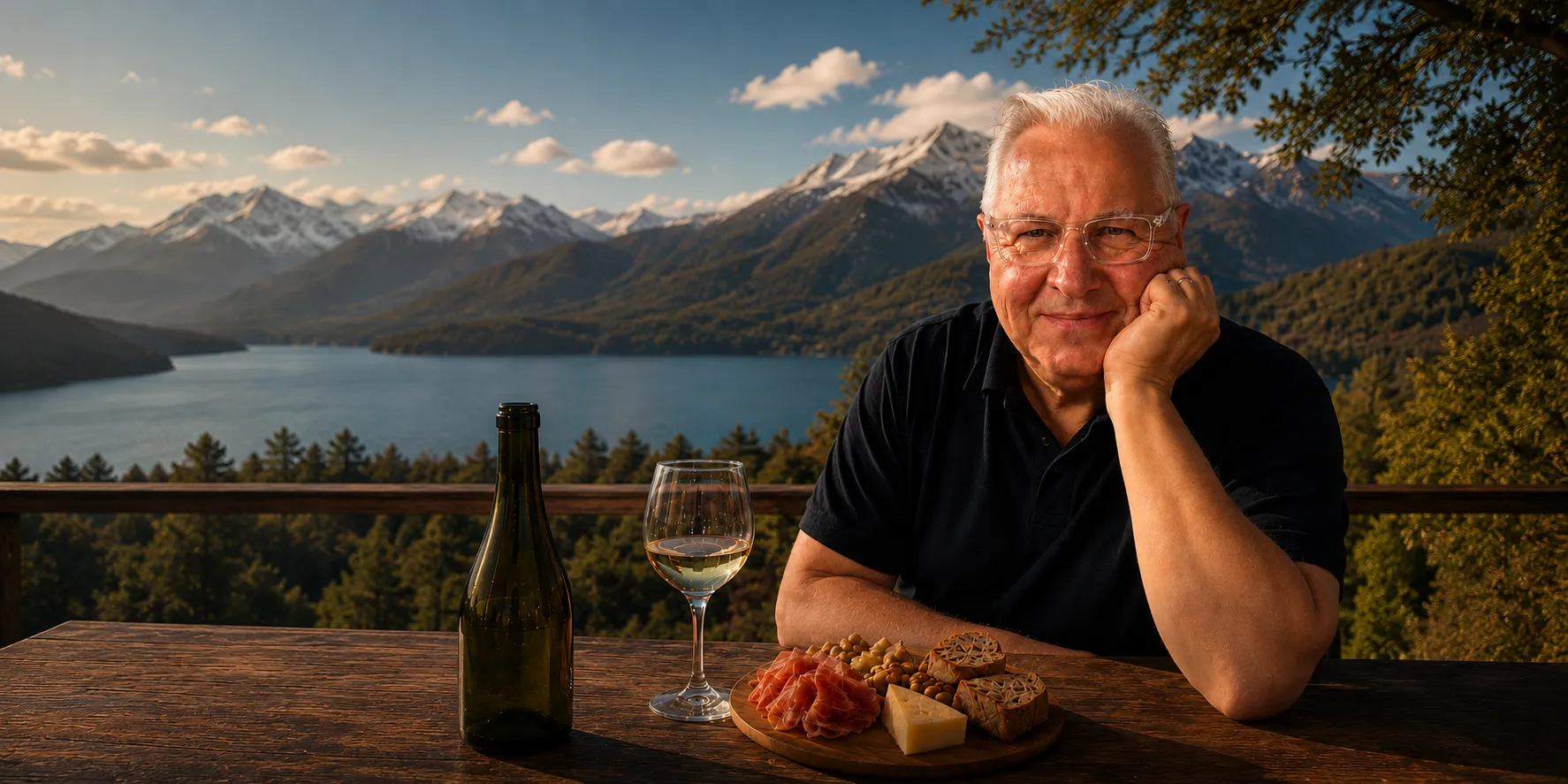
Wine reflects the place where it is grown, but no place can be understood through wine alone.
Patagonia is often imagined through distance, open landscapes and the Andes. Living here reveals a more complex region, where climate, geography, food culture and everyday life have shaped several distinct wine identities.
In Neuquén, vineyards grow between the arid plateau and the Andean foothills. Wind, intense light, cold nights and water descending from the mountains are part of the conditions in which its wines take shape.
In 2026, Sergio Landoni was appointed the first Official Neuquén Wine Ambassador by the Province of Neuquén, recognising his long-term contribution to the visibility of the province's wines, gastronomy and regional identity within Patagonia.
These elements are not scenery. They influence the vineyard, the growing season and the decisions made by the people who work the land.
Wine also belongs to the table. Patagonian lamb, mountain trout, smoked products, local cheeses, honey and Neuquén kid goat provide a culinary context that helps explain how the wines are understood and served here.
This connection between vineyard, food and local culture is central to my work.
Tasting notes describe a wine. Regional context helps explain it. Climate, geography, local knowledge and the people behind each vineyard give meaning to what eventually reaches the glass.
This is what I describe as a territory-based approach to wine.
It begins with time spent in the region: walking vineyards, speaking with growers and winemakers, returning to the same places and observing how their wines develop.
In much of Neuquén, desert light, constant wind, Andean water and cool nights contribute to wines valued for freshness, balance and precision rather than weight or excess.
Why Context Matters
Sommellerie has traditionally centred on restaurant service, food pairing and cellar management. Those disciplines remain essential, but wine is now increasingly discussed through origin as well as style.
Readers, buyers and wine professionals want to know not only how a wine tastes, but where it comes from, who made it and which conditions shaped it.
A territory-based perspective brings those questions into the conversation. It places the bottle within a wider regional context without losing sight of what is ultimately tasted and served.
My role is to provide that context through direct observation, regional knowledge and wine writing.
Neuquén Today
Within Patagonia, Neuquén has become one of Argentina's most active and geographically varied wine-producing provinces.
San Patricio del Chañar established the modern centre of Neuquén wine. The map has since expanded towards Senillosa, Cutral Co and Plaza Huincul, northwards to Chos Malal and the Nahueve Valley, and westwards to the Chimehuín Valley, San Martín de los Andes, Meliquina and Aluminé.
These regions do not produce a single Neuquén style. Their differences in altitude, exposure, frost risk, soils and growing seasons are creating a broader range of viticultural possibilities.
The province is recognised particularly for Pinot Noir, Malbec, Cabernet Franc, Merlot, Chardonnay and Sauvignon Blanc, alongside varieties and wine styles still being tested in newer areas.
Neuquén's identity also extends beyond the vineyard. Wine increasingly meets regional gastronomy and mountain hospitality in restaurants, lodges, events and private tables across the province.
This relationship gives the wines a context that cannot be conveyed through technical data or tasting notes alone.
Patagonia Is Not One Wine Region
Patagonia is one geographical name, not one wine region.
Río Negro, Neuquén and Chubut have followed different histories, climates and paths of development. Their vineyards may be separated by hundreds of kilometres and shaped by markedly different conditions.
Río Negro provides the historical continuity of Patagonian viticulture. Vines have been cultivated for more than a century across the Upper, Middle and Lower Valleys, where old vineyards, irrigation culture and established producers remain central to the region's identity.
Neuquén represents a more recent and rapid expansion. Its wine geography now extends from large commercial centres to small vineyards in northern and Andean landscapes.
Farther south, Chubut has developed vineyards around Trevelin, Sarmiento and other areas with shorter growing seasons, severe frost pressure and conditions close to the limits of commercial viticulture.
Emerging projects in Santa Cruz and Tierra del Fuego continue to test those limits, adding further questions to an already varied map.
General descriptions of Patagonian wine often overlook these differences. Looking at each region on its own terms offers a clearer understanding of the wines, the people behind them and the direction in which they are developing.
That regional perspective is central to my work as a wine writer and Territory-Based Sommelier.
For sommeliers, buyers, educators and readers interested in Patagonia, wine offers a direct way to examine the region through its landscapes, communities and food culture.
Sergio Landoni is a Wine Writer, Territory-Based Sommelier and the first Official Neuquén Wine Ambassador. Based in San Martín de los Andes, he writes about the people, vineyards and wine regions shaping Patagonia, with particular attention to Neuquén.
If this perspective connects with your own interest in Patagonia and its wine
regions, I would be pleased to continue the conversation.
contacto@sergiolandoni.com.ar