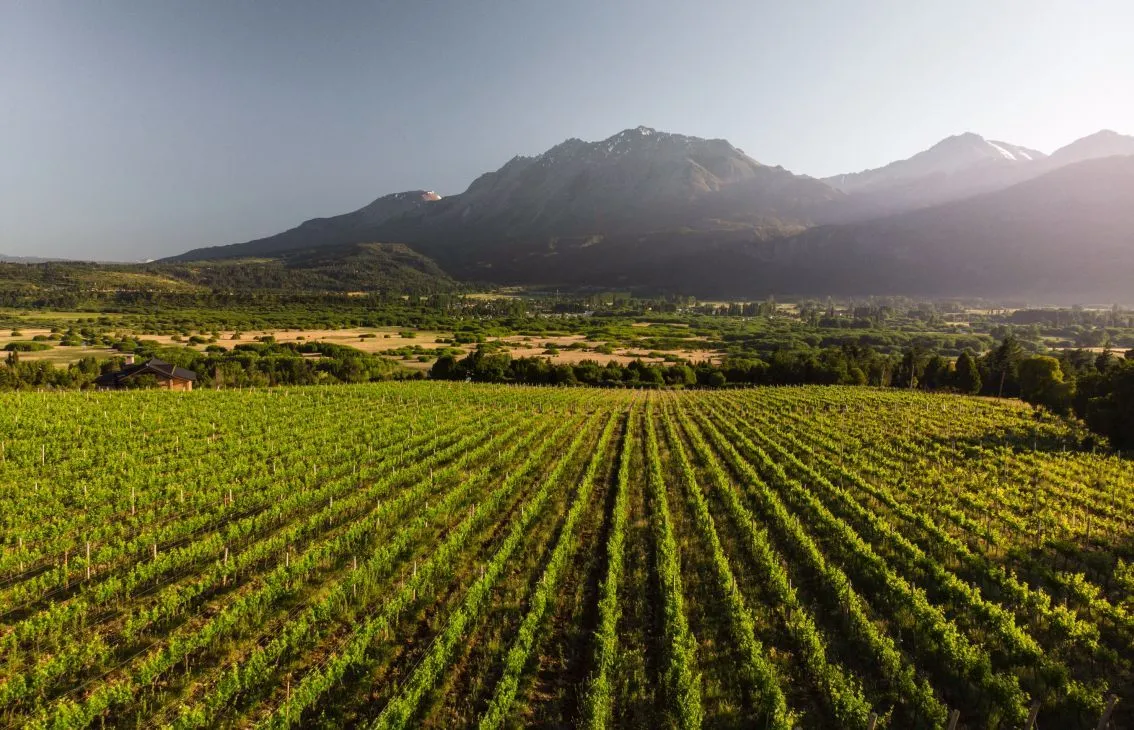
Patagonian wine is often described through climate, latitude or grape varieties. But none of those explain what actually defines it.
To understand these wines, you need to start somewhere else: the place itself. Not as a concept, but as a lived experience.
I work in Patagonia, I walk these vineyards, I taste these wines where they are made. And here, wine is not something you interpret from a distance — it is something you read directly from the landscape.
Patagonia in the global wine map
Patagonia belongs to the world of cool climate wines but does not behave like maritime regions such as Burgundy or coastal California. Its personality comes from desert conditions moderated by latitude and Andean water.
Ripeness arrives without heaviness, alcohol stays measured, freshness is not constructed, it appears. These wines do not seek power, they seek precision.
The regions
Patagonia is not a single wine region. It is a set of territories that share conditions, but express them differently.
Neuquén
Modern viticulture expanded here at the turn of the century, especially in San Patricio del Chañar. Vineyards were planted with planning from the beginning, orientation, irrigation and canopy management designed for the wind.
In Neuquén, viticulture is not inherited — it is designed. Everything responds to wind, water and light.
The wines show clarity and consistency. Pinot Noir develops red fruit and fine texture, Malbec becomes linear rather than opulent, Cabernet Franc expresses herbs instead of harsh vegetal notes.
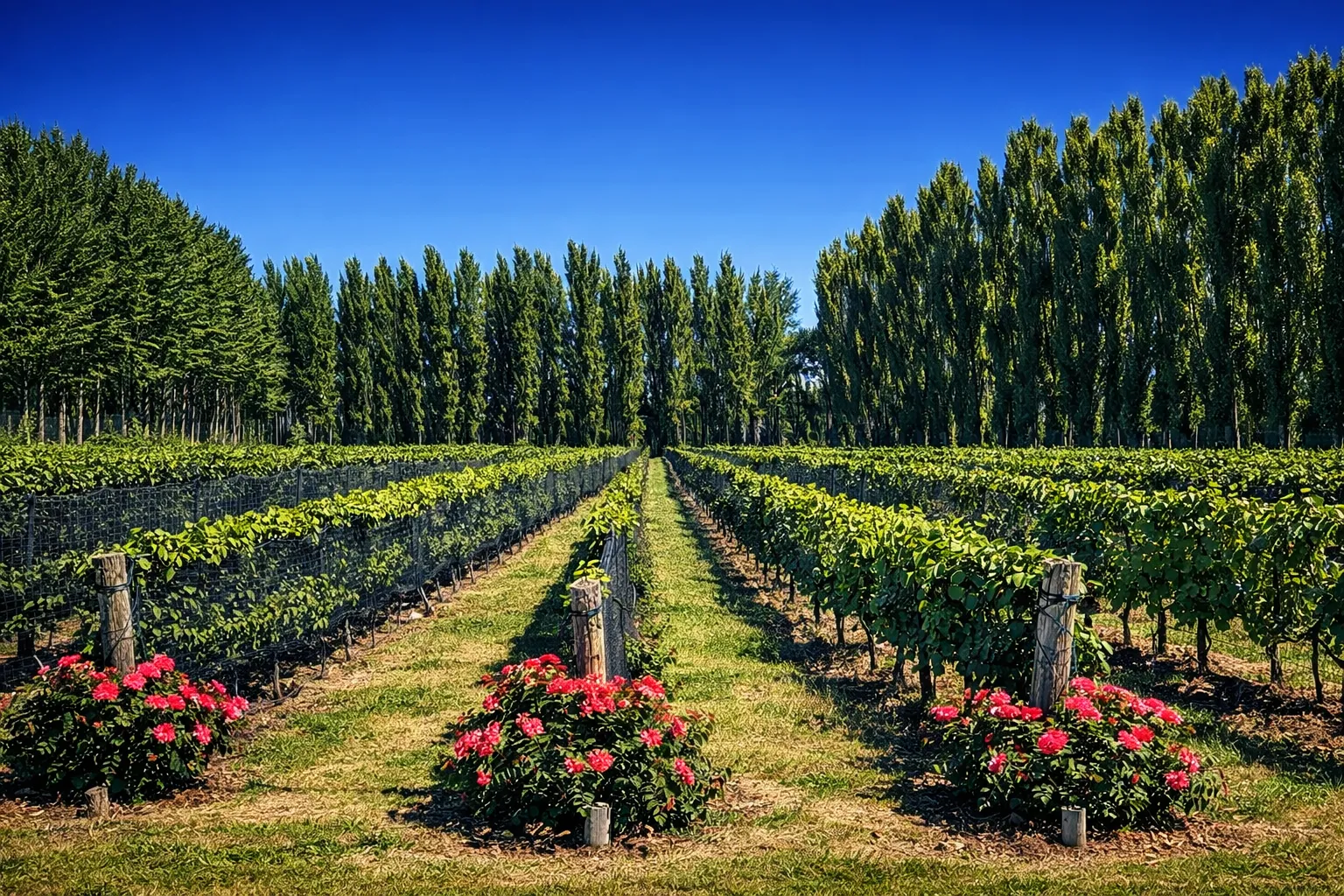
Poplar windbreaks are part of Patagonian viticulture. They protect shoots and shape the landscape.
Río Negro
The origin of Patagonian wine lies in the Alto Valle del Río Negro. Vines were planted more than a century ago along river oases and many still remain.
Río Negro represents the heritage of Patagonian wine, where old vines of Semillón and Malbec help explain the meaning of elegance. Merlot finds balance, Malbec becomes aromatic and medium-bodied, whites emphasize tension and length rather than volume.
Chubut
Further south, near Trevelin, viticulture becomes frontier. Frost risk, short seasons and slow ripening shape wines of delicacy and precision.
Production is small but meaningful. These vineyards show how far wine can go when site selection and patience replace intervention.
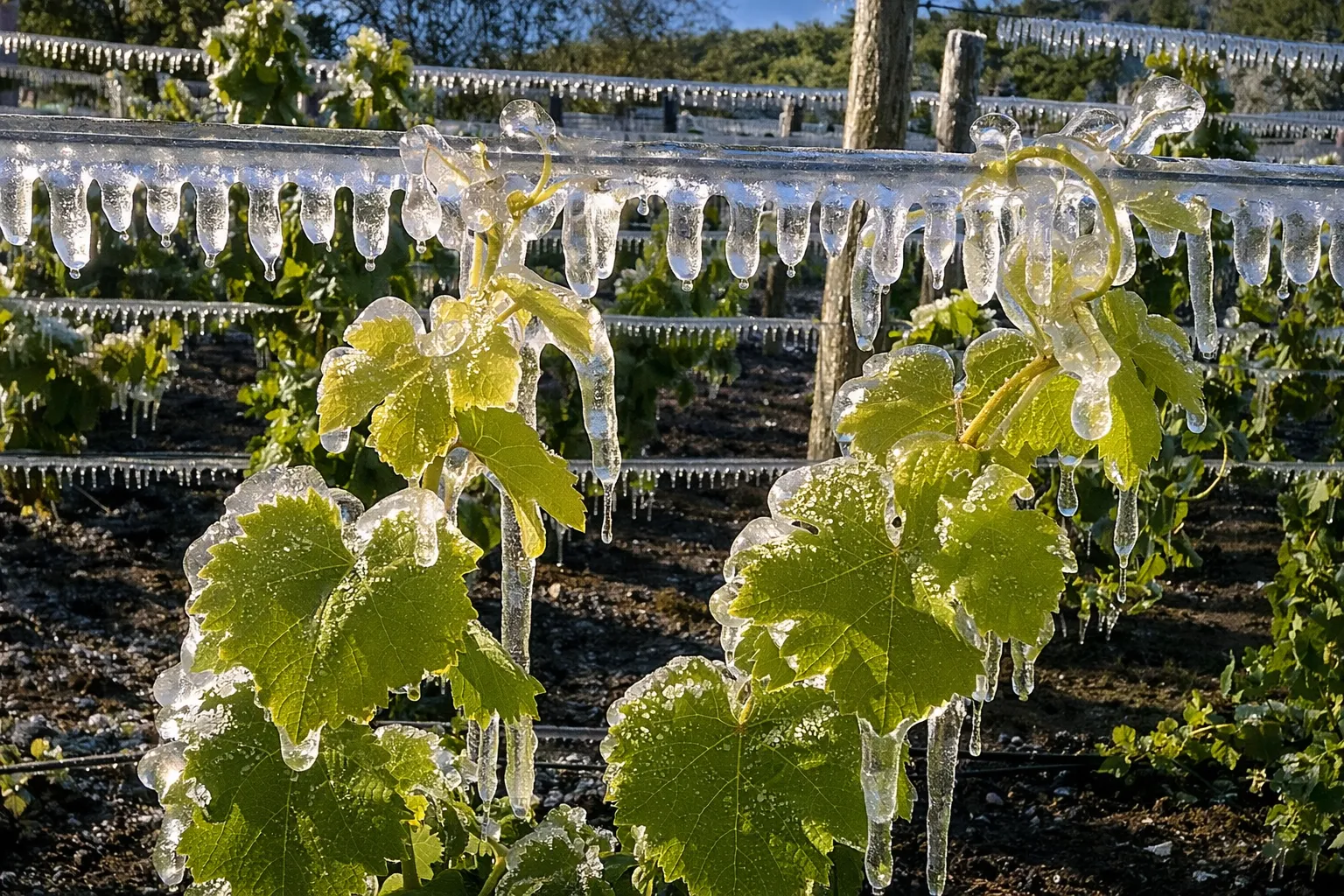
Frontier viticulture in Trevelin: frost control allows vines to survive extreme cold nights.
Varieties and style
Patagonia does not depend on a single grape. Varieties adapt to the environment.
Pinot Noir finds natural balance and lift,
Malbec moves away from warm-region richness toward floral structure,
Merlot becomes poised and proportionate,
Chardonnay and Sauvignon Blanc prioritize texture and freshness over tropical fruit.
Across all of them appears a shared identity: moderate alcohol, clear acidity, elegant structure.
Landscape and culture
Wine here cannot be separated from territory. Agriculture exists because Andean rivers cross the desert. Towns grew around irrigation canals, and wineries grew with them.
This is not inherited tradition, it is constructed culture. People arrived, planted vines, and both changed together. The identity of Patagonian wine lives in that relationship.
Meaning
Patagonia does not try to imitate any other wine region. It defines itself through its limits.
These wines are shaped less by intervention and more by what the landscape allows. They show proportion instead of excess, place instead of style.
In Patagonia, you do not try to dominate nature — you learn how far it lets you go.
And that is why these wines matter: not because of what they resemble, but because of what they reveal.
If you want to go deeper into this territory, you can explore the six specific wine regions of Neuquén: Neuquén Wine Regions explained .
About the author: Sergio Landoni is a territory-based sommelier in Patagonia based in San Martín de los Andes, Patagonia, focused on communicating wine through place, people and lived experience.
Author: Sergio Landoni, Sommelier de Territorio. Spanish version: Vino patagónico, regiones y paisajes.