
Neuquén Wine Regions in Argentine Patagonia
A territorial guide to one of Argentina’s most distinctive cool-climate wine regions.
By Sergio Landoni, Sommelier de Territorio

Neuquén is one of Argentina's most distinctive cool-climate wine regions and the leading wine-producing province in Argentine Patagonia. Today it accounts for 75.6% of the region's wine and must production, confirming both its productive weight and the maturity reached by the sector.
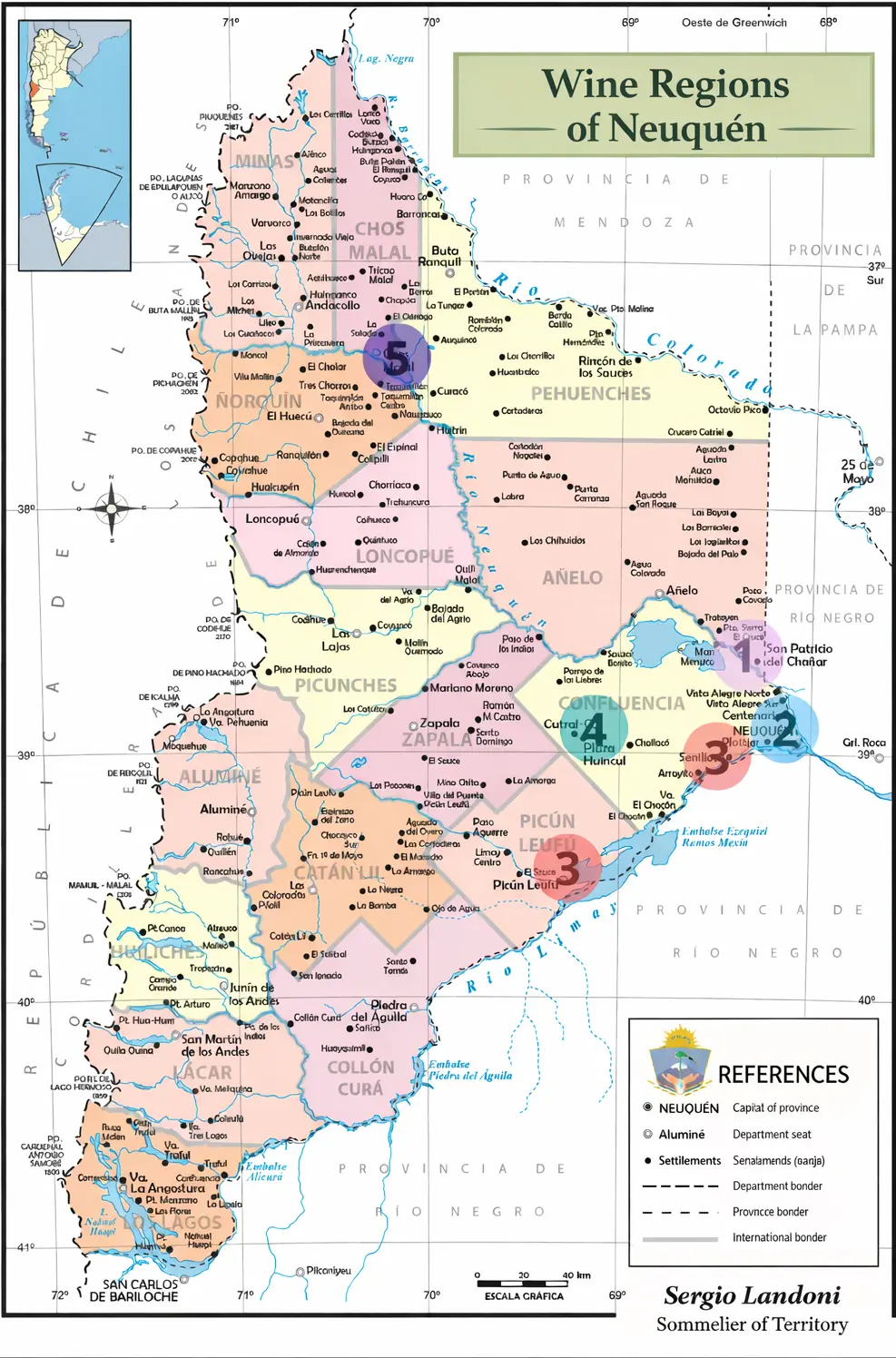
Its vineyards extend across landscapes that differ markedly in climate, altitude, soils, water sources and history. Today, Neuquén can be understood through six main wine areas: San Patricio del Chañar, Confluencia, the Limay River corridor, the Central Plateau around Cutral Co and Plaza Huincul, Northern Neuquén – Alto Neuquén, and Andean Neuquén.
What makes Neuquén so compelling is the way the same grape varieties speak differently depending on where they are grown. Pinot Noir does not say the same thing in San Patricio del Chañar as it does along the Limay River. Malbec shifts completely between the plateau of Cutral Co and the higher valleys around Chos Malal. White wines, with their naturally vibrant acidity, find particularly successful expressions throughout the province.
Behind all of this, there is something essential: people. Producers, winemakers, vineyard teams, and both large and small projects that have spent years learning the place, refining decisions, and deepening their understanding harvest after harvest.
This guide brings together years of visiting vineyards, speaking with producers and following the evolution of Neuquén's wine regions. Rather than catalogue every project, it offers a regional perspective on a province whose diversity continues to grow.
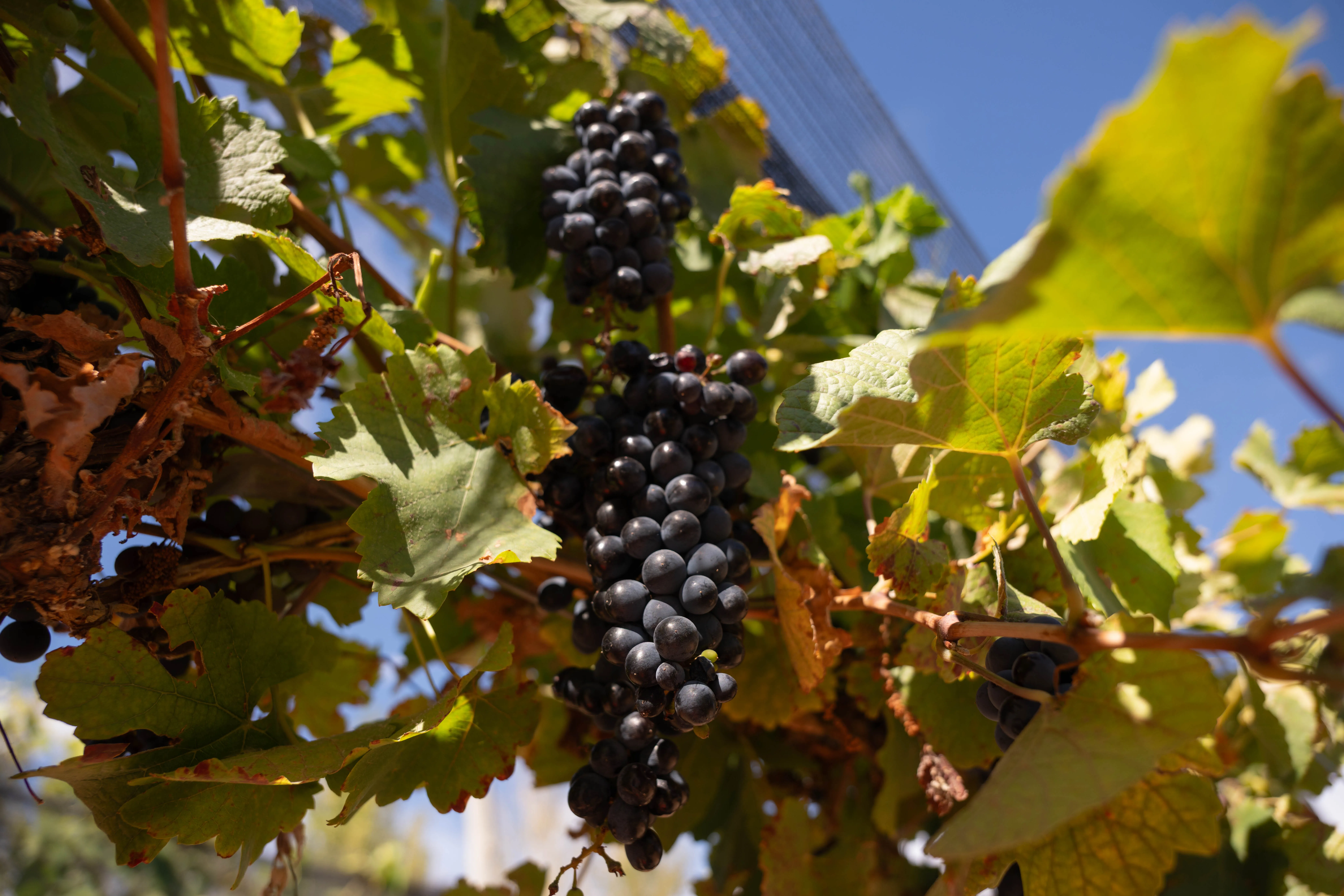
Quick overview of Neuquén wine regions
- San Patricio del Chañar: the contemporary engine of Neuquén wine, where scale, precision and wine tourism converge.
- Confluencia: urban-edge vineyards, river memory, smaller scale and subtle, food-friendly wines.
- Neuquén River bank: chacra landscape, artisanal projects and continuity with the agricultural history of the valley.
- Limay River corridor: freshness, tension, sandy-gravel soils and one of the clearest place-driven expressions in the province.
- Cutral Co and Plaza Huincul: plateau viticulture, deep-well irrigation, structure and a distinctly desert identity.
- Northern Neuquén · Alto Neuquén: old vines, northern heritage, altitude, small-scale production and a strong sense of origin.
- Andean Neuquén: emerging mountain viticulture around San Martín de los Andes, Meliquina, the Chimehuín Valley and Aluminé.
Spanish version: Las seis zonas vitivinícolas de Neuquén
Why talk about zones in Neuquén
Because wine in Neuquén is not explained by the province alone. It is explained by the exact place where it is born. Wind does not behave the same way in San Patricio del Chañar as it does in Chos Malal. Water does not function in the same way along the Limay River as it does in a vineyard irrigated from deep wells on the plateau. Altitude, soils and scale change everything.
Recognising these regions is not about drawing boundaries. It is about understanding why the wines differ from one place to another.
1. San Patricio del Chañar
Geographic reference: about 50 km northwest of Neuquén city, on the plateau linked to the Neuquén River irrigation system.
San Patricio del Chañar is the starting point of contemporary Neuquén wine. An oasis created on the plateau, where irrigation from the Neuquén River transformed an arid landscape into one of Patagonia's most important wine regions. Wine here is born from contrast: poor stony soils, constant wind, wide diurnal range and long sunlight hours. Demanding conditions that, when interpreted well, become freshness, tension and character.
Origin and scale: foundations of a modern wine region
It is impossible to tell the story of El Chañar without beginning with Bodega del Fin del Mundo. It was the pioneering project that, starting in 1999, initiated the productive transformation of the plateau. It proved that Neuquén could produce wine not only with quality, but also at scale and with international standards.
Familia Schroeder added technical sophistication and a powerful symbolic identity. Its gravity-flow winery became an architectural landmark, while the discovery of dinosaur remains during construction gave rise to the Saurus line, now one of Argentina’s most recognizable wine labels.
Malma completes this foundational trio with a stronger terroir and hospitality perspective. It has been instrumental in positioning El Chañar through freshness, precision and a coherent relationship between vineyard, cuisine and landscape.
Precision projects and evolution
Over time, El Chañar ceased to be associated with a single scale or a single style. Patritti expanded the region’s understanding of varieties such as Cabernet Franc and Petit Verdot, proving that the area holds far more potential than traditional blends alone.
In recent years, the El Chañar wine hub also underwent a significant restructuring. In 2021, Grupo Peñaflor acquired the facilities and a significant share of the historic vineyards of Bodega Patritti, opening a new phase for the original estate. Meanwhile, the Patritti family continued producing labels such as Primogénito and Sangre Azul at boutique scale, while the former property began operating as Bodega Marantiqua.
This confirms the maturity of El Chañar: international-scale structures coexist with family-driven projects of precise identity.
The new scale: boutique and family wineries
At this level, El Chañar gains soul. Familia Aicardi represents artisanal quality taken seriously: a small winery, meticulous vineyard work carried out vine by vine, and decisions made with time and proximity.
Tero Rengo, in turn, expresses resilience and passion. Its smaller scale allows for experimentation and a more intimate reading of the gravelly soils and extreme climate of the plateau. The result is a personal interpretation of place.
Soils, climate and Pinot Noir: the key to character
One of the great differentiators of San Patricio del Chañar lies underfoot. Gravelly soils, low in organic matter and with excellent drainage, force the vine to root deeply and regulate vigor naturally. Combined with constant wind and a marked diurnal range, these conditions help explain why Pinot Noir achieves here wines of tension, natural freshness, well-defined fruit and fine tannins.
Today, one of the most consistent Argentine references for Patagonian Pinot Noir is found in San Patricio del Chañar. Pinot Noir, Merlot and Cabernet Franc all perform very well here. Malbec is also present, expressing a firmer profile with marked tannins and a distinctly Patagonian edge.

Wine tourism and gastronomy: wine as experience
None of this happens in isolation. Saurus Restaurant and Malma Restaurant helped transform El Chañar into a true wine tourism corridor. Lunch overlooking the plateau, with the wind as soundtrack and the vineyard only a few meters away, helps explain something essential: in El Chañar, wine is understood not only through tasting, but through landscape, distance and scale.
2. Confluencia, Neuquén city and surroundings
Geographic reference: in Neuquén city and its immediate surroundings, where the Limay and Neuquén rivers meet and the Río Negro begins.
Confluencia is the wine that still resists within the city. Small vineyards, shaped by river influence and urban growth, sit on old fluvial beds with marked calcareous and mineral presence.
This is a zone of reduced scale, where the river moderates the climate, the wind arrives softened, and ripening tends to unfold more slowly and more precisely. The wines do not seek impact. They seek balance, tension and definition.
In this context, Mabellini Wines appears as one of the viticultural hearts of Confluencia. Located on what many call the city’s “last street,” this boutique project works with a singular vineyard surrounded by the city yet still governed by rural logic.
One of its greatest values lies in the living history of the vineyard. It preserves Pinot Noir plant material linked to the early twentieth century, to the old chacras and to the railway history of the region. It is not only a varietal matter. It is cultural and genetic heritage.
Merlot and Chardonnay tend to stand out here with fine, gastronomic and expressive profiles. Cabernet Franc and Pinot Noir can also perform beautifully, always in a register of subtlety and balance.
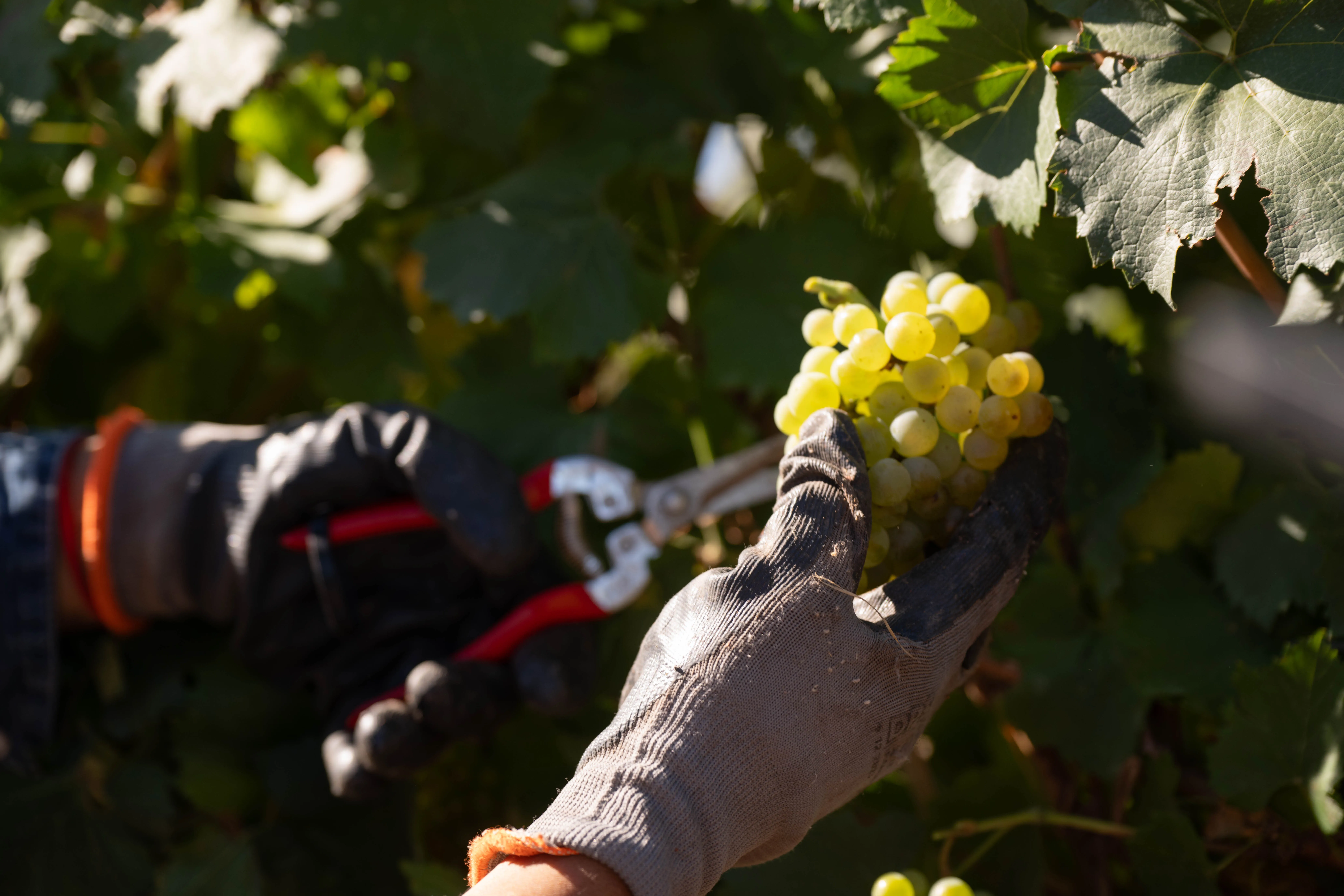
Subzone · Neuquén River bank (Centenario)
Geographic reference: the chacra corridor around Centenario and Vista Alegre Sur, on the banks of the Neuquén River.
Within this same broader region, the Neuquén River bank offers another essential voice. Here the landscape opens, vineyards return to dialogue with traditional agriculture, and wine recovers a more rural logic of valley and chacra.
Small-scale artisanal projects help define this riverside identity. In Vista Alegre Sur, Costa Oculta, through its Ojo del Río wines, contributes an honest reading of the fluvial landscape through limited production and a low-intervention spirit.
Viñas Constanza belongs naturally within this environment. Planted in 2006 on a reconverted orchard property, with first harvests from 2008 onward, it reflects productive continuity and a strong bond with the agricultural history of the place.
Its choice of Refosco as an emblematic variety says a great deal: a grape of character, firm acidity and marked tannins that, in this context, finds an honest and balanced expression, more connected to the table than to sheer impact.
The Neuquén River bank does not seek contrast for its own sake. It completes the story of Confluencia by adding a more productive, valley-based and deeply Neuquén perspective.
3. Senillosa and the Limay River corridor
Geographic reference: from Senillosa to Picún Leufú, following the course of the Limay River.
The Limay River corridor is one of the most expressive wine landscapes in Neuquén. Sand, wind, broad diurnal range and a river that organizes the landscape: here, freshness is not a stylistic resource but a natural condition.
The Limay provides what matters most: cold, clean meltwater, sandy soils with gravel, and a distinctly Patagonian diurnal range. Even in warm vintages, that balance preserves freshness and translates into wines with a clear, direct profile, where a sense of place matters more than sheer power.
Within this landscape, Fincas del Limay plays a central role. With vineyards in Senillosa and Picún Leufú, the winery is currently going through a phase of renewal and consolidation, focusing on vineyard work, stylistic definition and a clearer expression of place.
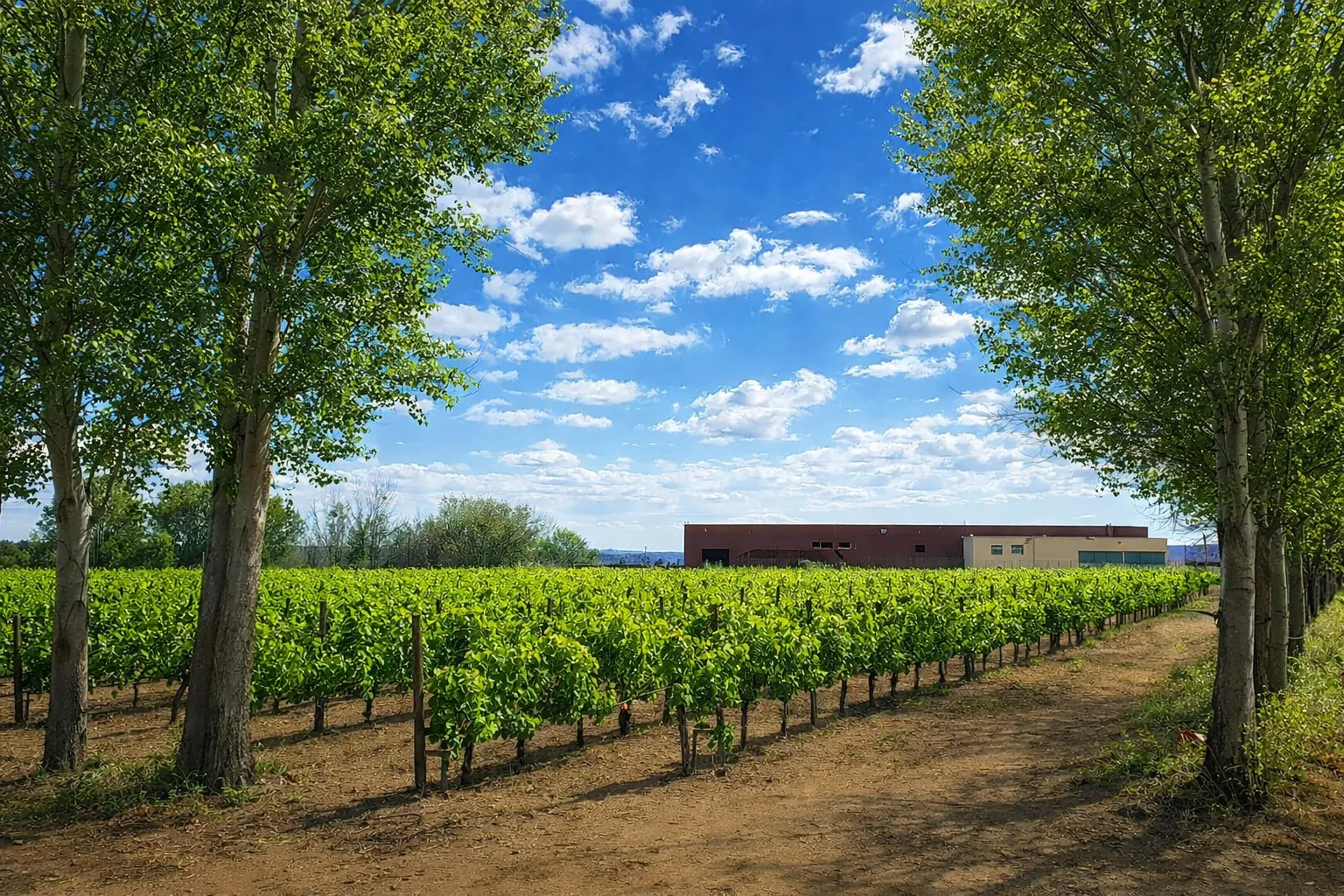
One unusual chapter in the corridor's recent viticultural history involves Ugni Blanc. The variety arrived through a nursery mistake, when vines were supplied in place of Chardonnay. It adapted successfully to conditions in Senillosa and led to a wine that had never originally been planned.
The resulting white showed a floral profile, freshness and good structure. Beyond the anecdote, the experience adds useful information about the behaviour of a variety that remains uncommon in Neuquén.
Among the red wines, Pinot Noir holds an important place, showing freshness, aromatic definition and fine tannins. Other varietals and blends are also produced, both youthful and age-worthy, while the whites generally retain good acidity and clearly defined profiles.
Around Fincas del Limay, several smaller projects are broadening the wine identity of Senillosa. Impasse, the family project of Rosana Jurio and Adrián del Negro, now has its new winery in place and is developing its wine-tourism and gastronomic proposal. Tierra Tehuelche and Puerta Oeste work on an artisanal, family scale.
They are joined by Terra Indómita, a young family project working with approximately 2.5 hectares of vines around 15 years old, planted to Syrah, Cabernet Sauvignon and Malbec. Under its Hallazgo line, Syrah has shown particularly interesting results and is one of the varieties receiving special attention from the project.
Senillosa and the Limay River corridor therefore combine a longer-established boutique winery with family and artisanal projects of different scales. New varieties, winery development and wine-tourism initiatives all point to a wine area that continues to evolve.
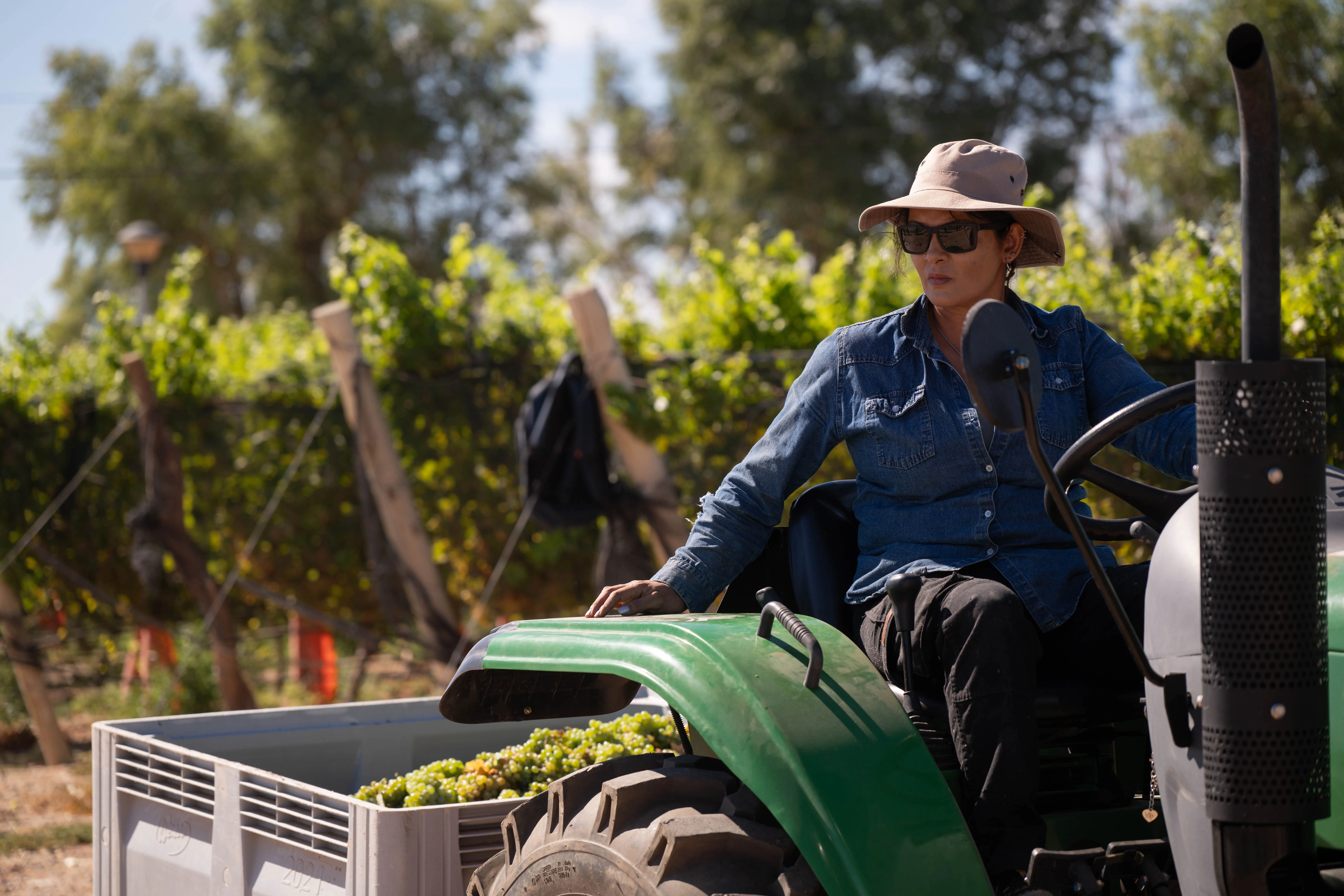
4. Central Plateau · Cutral Co and Plaza Huincul
Geographic reference: Cutral Co and Plaza Huincul, in central Neuquén, on the plateau, far from the main watercourses.
The Oil Region represents one of the most singular expressions of Neuquén wine. Viticulture here unfolds under demanding conditions, in open plateau country, with constant wind, great diurnal range and a landscape that offers no concessions, yet leaves a clear and recognizable imprint.
In Cutral Co and Plaza Huincul there are no nearby rivers. Irrigation relies on deep-well water, which demands precise water management and makes it possible to obtain grapes of marked concentration without sacrificing freshness when vineyard work is well interpreted.
The wines of the area express character and typicity, but also stylistic diversity. They do not try to soften the place they come from. They aim to interpret it and express it with precision.
In this context, Cabernet Franc appears as one of the varieties that best explains the zone, often showing intense, spicy and deep profiles. Syrah displays enormous potential, while Malbec expresses itself with volume and structure without losing varietal identity.
The Municipal Winery of Cutral Co has played an important role in the development of local viticulture, demonstrating that grapes can be grown and wines produced under these plateau conditions. The project has also generated practical experience in vineyard management, varietal behaviour and winemaking in an environment very different from Neuquén's river-irrigated valleys.
5. Northern Neuquén · Alto Neuquén
Geographic reference: around Chos Malal and Taquimilán, in northern Neuquén, among higher valleys and pre-Andean landscapes.
Alto Neuquén is root and memory. Wine here is not experienced as an industrial pole, but as a story: old Criolla vines trained in the traditional parral system, small vineyards, clean air, colder nights and a landscape that sets the pace. This is not a region of volume. It is a region of meaning.
The north also reveals a distinctive geological layer. In several sites, soils of calcareous marine origin contribute to a strong sense of place in these small-scale wines. Beyond Chos Malal and Taquimilán, there is also small-scale local production around Buta Ranquil.
Old Criolla vines are part of that living memory. Here, Criolla is not used to chase trends. It is used to keep culture alive through wines of identity, honest fruit and natural freshness.
Malbec also takes on a different form in Alto Neuquén. It can become lighter, more floral and more tense, with natural acidity shaped by climate. Taste the same variety across nearby places and one thing becomes immediately clear: the grape changes because the land changes.
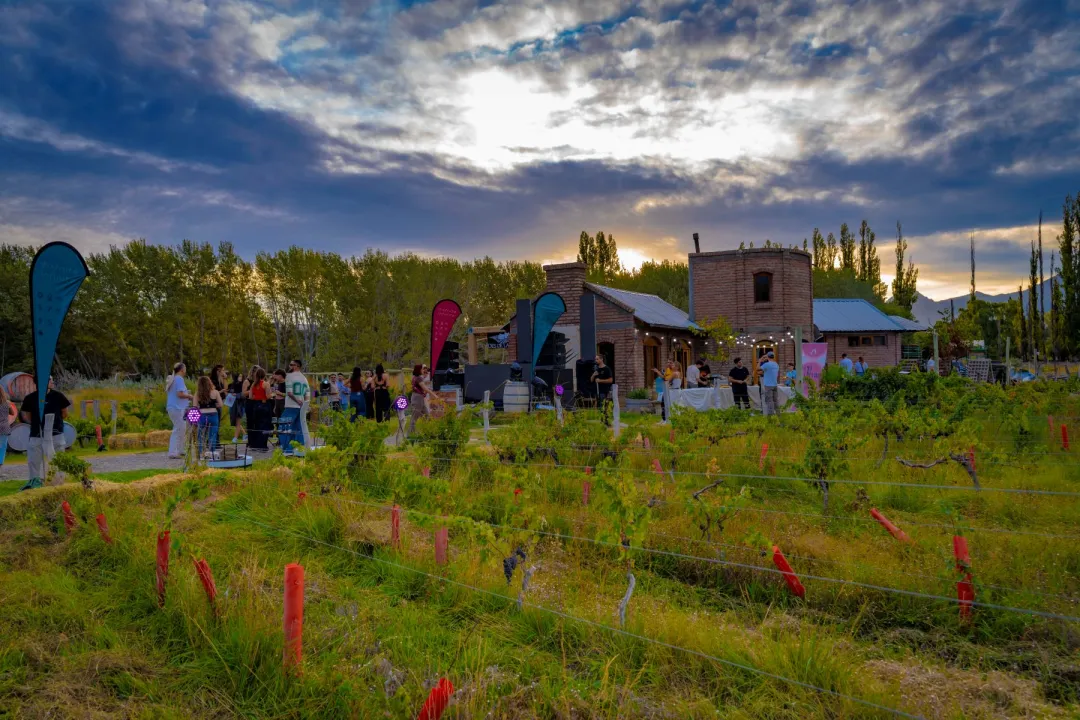
Alto Neuquén also holds future potential. The surrounding valleys invite careful exploration, always with respect for scale, history and the limits of the place itself.
6. Andean Neuquén · an emerging wine landscape
Geographic reference: the Andean corridor of Neuquén, including San Martín de los Andes, Villa Lago Meliquina, the Chimehuín Valley and the Aluminé River area.
Andean Neuquén remains an emerging and very small-scale wine area, but its viticultural history is now broad enough to deserve a place on the provincial wine map. Mountain climate, colder temperatures, frost risk, shorter growing cycles and strong thermal contrasts create conditions very different from those of the plateau and river valleys.
In San Martín de los Andes, projects such as Loma Redonda provide one of the most visible recent expressions of mountain viticulture. These small plantings help explore how vines respond to a markedly cooler environment and a growing season strongly influenced by the Andes.
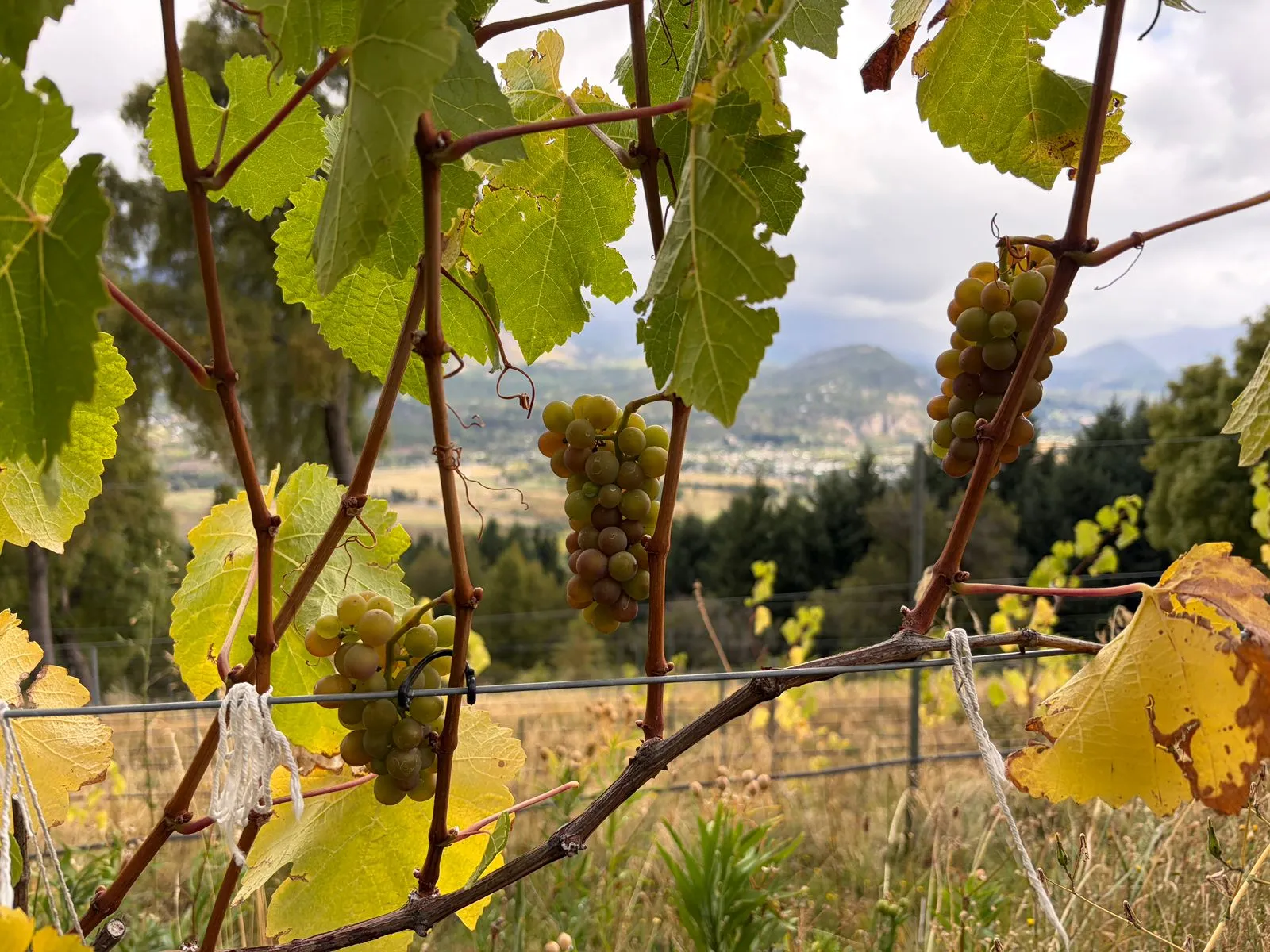
Villa Lago Meliquina adds another experience within this Andean corridor. Small plantings there allow growers to observe vine behaviour under a stronger mountain influence and climatic conditions that differ even from those of nearby San Martín de los Andes.
An especially important precedent lies in the Chimehuín River Valley. At Estancia Chimehuín, a vineyard planted in 2004 provides more than two decades of viticultural history in an Andean environment. Its continuity offers a much longer period of observation than the more recent experimental plantings elsewhere in the region.
Further north, plantings along the Aluminé River broaden the area under observation. This introduces another fluvial and mountain environment into Neuquén's wine map, with its own conditions of altitude, temperature, exposure and water availability.
These experiences are at different stages, and it is still too early to define a common profile for Andean Neuquén. The differences between San Martín de los Andes, Meliquina, the Chimehuín Valley and the Aluminé River area are significant enough for each place to be observed on its own terms.
Cold temperatures, frost, the length of the growing cycle and grape ripening will be central to determining which varieties are best suited to each site. Pinot Noir and Sauvignon Blanc are already part of the ongoing trials, while future harvests will provide more precise information.
Andean Neuquén remains an emerging, very small-scale wine area. However, the accumulated vineyard history and the number of existing plantings are now sufficient to include it within Neuquén's broader wine map. San Martín de los Andes, Meliquina, the Chimehuín Valley and Aluminé show that viticultural exploration in the province is also advancing into its mountain environments.
Closing
From San Patricio del Chañar to the riverside vineyards of Confluencia, from the Limay corridor to the Central Plateau, from Alto Neuquén to the Andean landscapes, the wine changes because the place changes.
Today, six main wine areas can be recognised in Neuquén through concrete differences in climate, soils, water sources, altitude, grape varieties, history and productive scale. Some have more than two decades of development, while others are only beginning to build knowledge through their first plantings and harvests.
Neuquén is therefore not a single wine region. Its vineyards are shaped by different landscapes, water sources, altitudes, climates and decisions made over time by the people who work them.
This map will undoubtedly continue to change. New vineyards, grape varieties and experiences will help us understand places that until recently stood outside the province's established wine geography. Northern Neuquén and the Andean zone are clear examples of a process that still has much to reveal.
Recognising these differences is not about fixing a definitive map. It is about understanding why the same varieties can produce such different wines across the province.
That diversity is one of Neuquén's greatest strengths and one of the reasons its wines deserve to be understood through the places from which they come.
Map · Neuquén wine regions
Further reading
- A Territory-Based Perspective on Patagonian Wine
- Patagonian Wine Regions and Identity
- Spanish version of this article
- Back to Patagonia Journal
Share this article: sergiolandoni.com.ar/en/neuquen-wine-regions-patagonia.html
Spanish version: sergiolandoni.com.ar/zonas-vitivinicolas-neuquen.html