
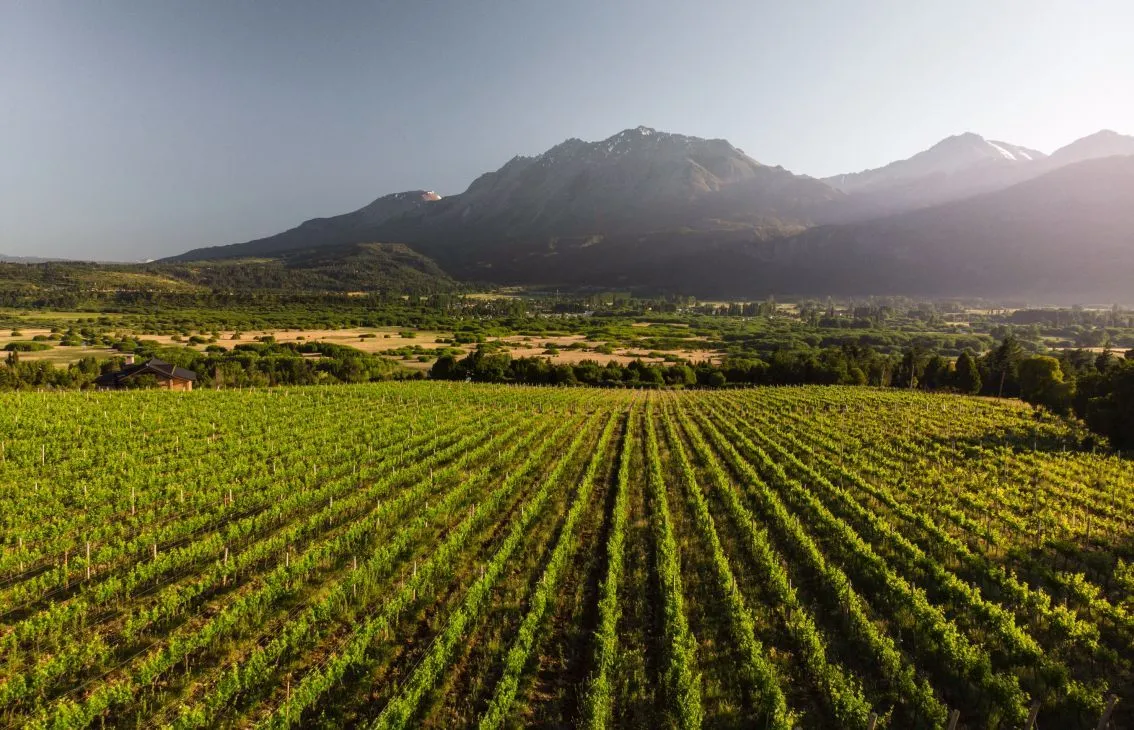
Patagonia is often discussed as a single wine region. In reality, it is a vast collection of landscapes, climates and wine-growing histories.
Neuquén, Río Negro and Chubut share a geographical name, but their vineyards have developed under different conditions and followed very different paths. Understanding those distinctions is essential to understanding the wines.
I live and work in Patagonia, visit its vineyards and taste these wines where they are made. That proximity makes it possible to read them within the landscapes, communities and decisions that shaped them.
Patagonia on the Global Wine Map
Patagonia belongs broadly to the world of cool-climate wine, but it does not behave like Burgundy, coastal California or other regions moderated by maritime influence.
Much of its viticulture develops in dry conditions, sustained by water descending from the Andes. Latitude, wind, intense sunlight and marked differences between daytime and night-time temperatures influence ripening across the region.
These conditions can produce wines with moderate alcohol, sustained acidity and clearly defined fruit. The precise result depends on the vineyard and the decisions made there, rather than on a single Patagonian formula.
Distinct Wine Regions
Patagonia is one geographical name, not one wine region. Its principal wine-producing provinces contribute different histories, scales and interpretations of place.
Neuquén
Modern viticulture took shape in Neuquén during the late 1990s and early 2000s, particularly in San Patricio del Chañar. Vineyards were established with irrigation, orientation and canopy management planned for the dry climate and persistent wind.
Since then, the province’s wine geography has expanded towards river corridors, the central plateau, northern valleys and the Andean foothills. These areas do not produce a single Neuquén style.
Pinot Noir can show precise red fruit, fine tannins and sustained acidity. Malbec often develops a firmer, less opulent profile, while Cabernet Franc combines ripe fruit with herbal and spicy notes. Chardonnay and Sauvignon Blanc also perform consistently across several parts of the province.
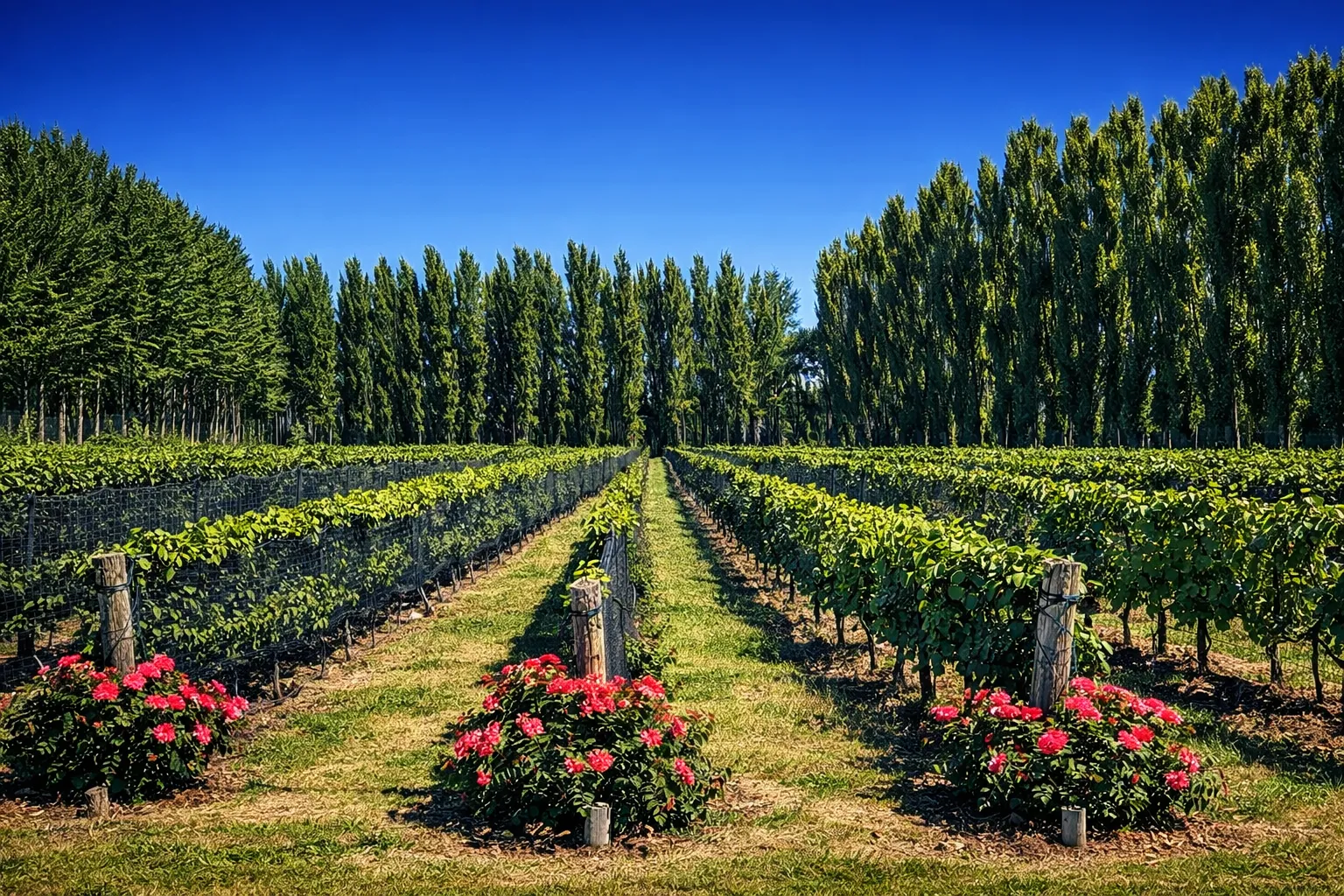
Poplar windbreaks protect vines from persistent winds and have become a familiar part of the Patagonian vineyard landscape.
Río Negro
Río Negro provides the historical foundation of Patagonian wine. Vines have been cultivated for more than a century across the Upper, Middle and Lower Valleys, supported by irrigation systems connected to the region’s rivers.
Old vineyards of Semillón, Malbec and other varieties preserve an important part of that history. Merlot can achieve balance and fine structure, Malbec often becomes aromatic and medium-bodied, while the white wines combine texture, acidity and length.
Río Negro’s importance lies not only in vineyard age. Its agricultural culture, established wineries and accumulated local knowledge provide continuity within Patagonia’s changing wine map.
Chubut
Farther south, Chubut has extended Argentine viticulture into areas with shorter growing seasons, severe frost pressure and conditions close to the limits of commercial wine production.
Around Trevelin, Sarmiento and other developing areas, careful site selection and precise vineyard management are essential. Production remains limited, but its wines have added another distinct identity to Patagonia.
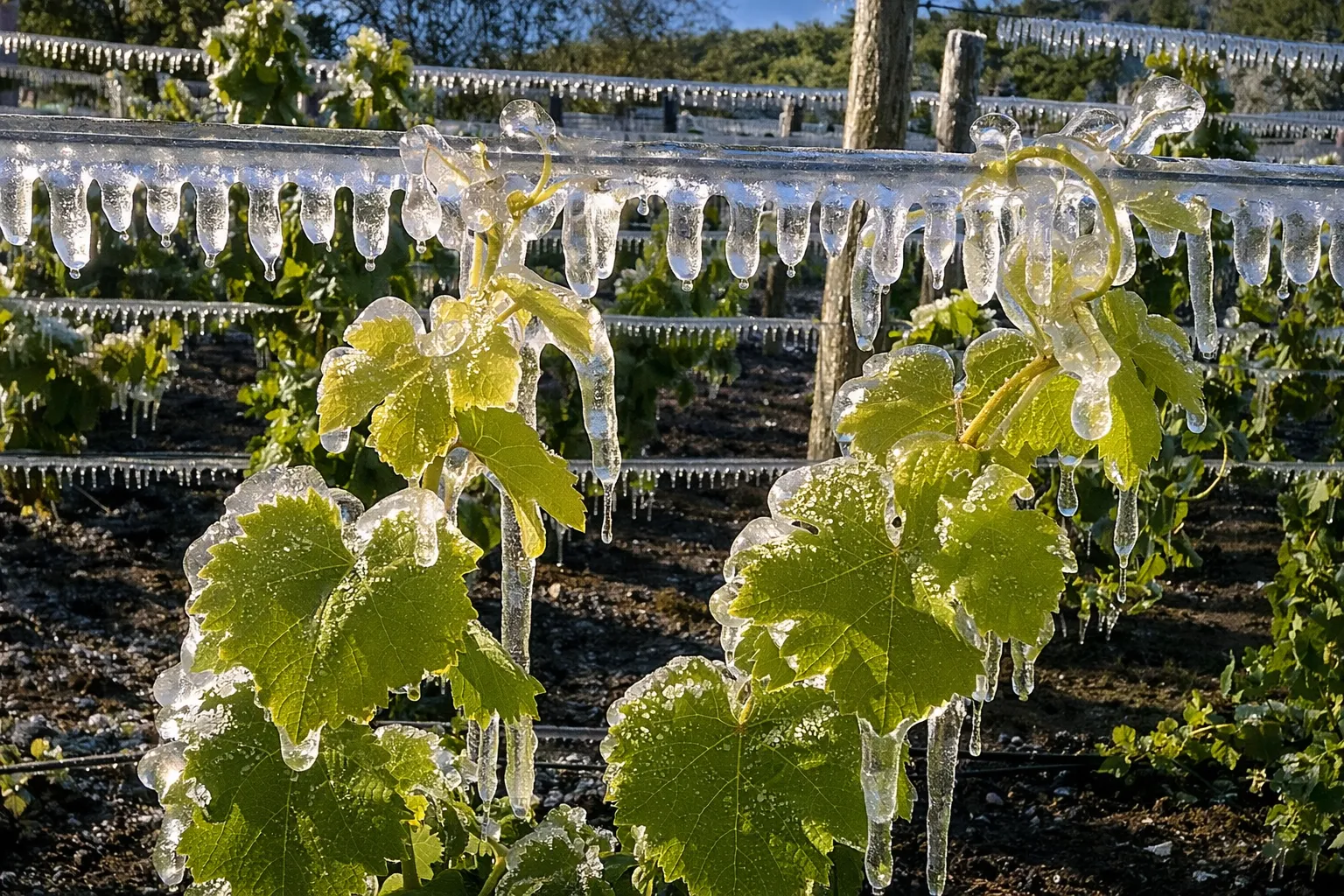
Frost management is one of the defining challenges of viticulture around Trevelin, in western Chubut.
Varieties and Wine Styles
Patagonia does not depend on a single grape variety. Pinot Noir, Malbec, Merlot, Cabernet Franc, Chardonnay, Sauvignon Blanc and Semillón respond differently across its regions.
Pinot Noir often finds natural balance and fine texture. Malbec moves away from the broad richness associated with warmer areas and can develop floral aromas, firmer structure and sustained acidity. Merlot remains particularly relevant in Río Negro, while Chardonnay and Sauvignon Blanc frequently combine freshness with texture rather than overt tropical fruit.
These characteristics should not be treated as a fixed regional style. Vineyard location, water, altitude, soils, growing season and winemaking decisions continue to produce meaningful differences within Patagonia.
Landscape, Agriculture and Culture
Wine in Patagonia cannot be separated from the agricultural systems that made cultivation possible. Rivers descending from the Andes cross otherwise dry landscapes, feeding irrigation canals, orchards, vineyards and towns.
Río Negro carries the continuity of an established wine culture. Neuquén shows how a modern wine region can expand across contrasting landscapes. Chubut reflects the challenges and possibilities of viticulture farther south.
Regional gastronomy adds another layer of context. Patagonian lamb, mountain trout, smoked products, local cheeses and other foods connect wine to the places where it is produced and served.
A Regional Perspective
Patagonia does not need to resemble another wine-producing region. Its interest lies in the differences between its own valleys, plateaus, river corridors and mountain landscapes.
These wines reflect what each place permits and what growers and winemakers have learned to do within those conditions. Their identity comes from that relationship, not from a single variety or stylistic formula.
Looking at Patagonia region by region offers a clearer view of its wines and of the people gradually defining its contemporary wine landscape.
For a closer examination of Neuquén, explore: Neuquén Wine Regions in Argentine Patagonia .
About the author: Sergio Landoni is a Wine Writer, Territory-Based Sommelier and the first Official Neuquén Wine Ambassador. Based in San Martín de los Andes, he writes about the people, vineyards and wine regions shaping Patagonia.
Author: Sergio Landoni · Wine Writer · Territory-Based Sommelier · Official Neuquén Wine Ambassador. Spanish version: Vino patagónico, regiones y paisajes .