Patagonia: Where I Learned That Wine Also Tells Stories
A personal reflection on Patagonia, wine and the way place changes what we understand in the glass.
By Sergio Landoni, Wine Writer and Territory-Based Sommelier
Published: · Updated:
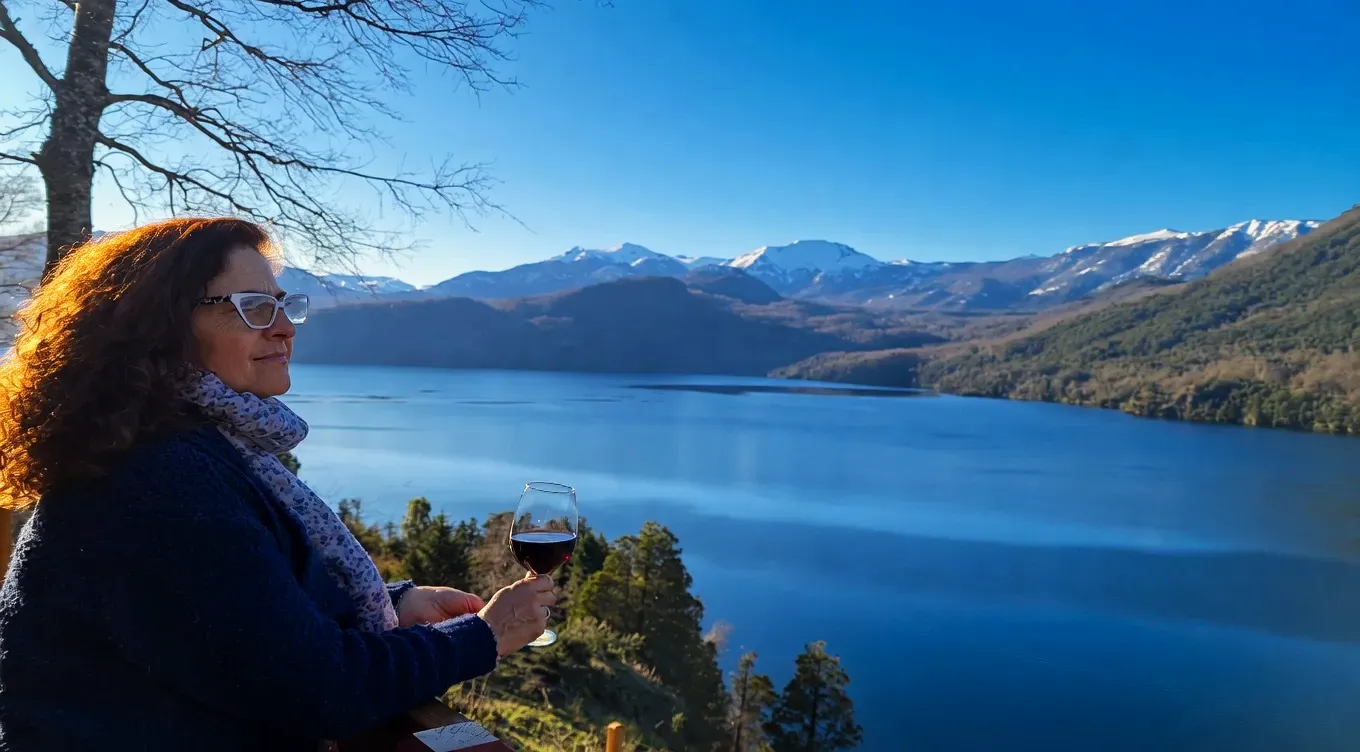
In San Martín de los Andes, I began to understand how completely a place can change the experience of a wine.
There was a glass of Patagonian Pinot Noir on the table, accompanied by local cheeses and smoked meats. Beyond it were Lake Lácar, the mountains, the forest and the last light of the day. The smell of firewood, the conversation and the unhurried rhythm of the evening became part of the wine itself.
Nothing about the bottle had changed. The setting had changed the way we perceived it.
Wine is often discussed as though it existed independently inside the glass. We speak about grape varieties, vintages, oak, structure and serving temperatures. Those elements matter, but they do not account for the full experience.
A wine from Neuquén served with regional food, beside the cold water of the lake and under the southern wind, carries a context that cannot be reproduced through a technical description alone.
Landscape, gastronomy, climate, hospitality and the people around the table do not alter the wine chemically. They alter the way it is understood and remembered.
That realisation gradually changed the way I looked at the wines of Neuquén. Their quality and identity were already present, but the conversation around them often remained confined to technical information, grape varieties and tasting notes.
There was another story to tell. It included growers, winemakers, regional food, Patagonian roads, small vineyards, established wineries and the way wine is experienced in the places where it is made.
My interest was never to place scenery around a bottle as decoration. It was to understand how the bottle belonged within a larger regional culture.
The wines of Neuquén are not fully explained in a formal tasting room. They become clearer after visiting the vineyards, speaking with the people who work them and observing how wine enters everyday life across Patagonia.
This perspective eventually led me to describe my work as that of a Territory-Based Sommelier.
The expression does not place territory above wine. It simply recognises that wine is connected to the landscape, culture, food and people of the region where it is produced.
Argentine wine built much of its international identity around grape varieties, wineries and winemakers. That development was important. It now leaves room for a closer examination of the differences between regions and the local knowledge behind them.
Neuquén, Río Negro and Chubut share the name Patagonia, but not a single history, climate or wine identity. Looking at those differences allows the wines to be understood with greater precision.
In Neuquén, wine is also connected to tourism, mountain hospitality and a food culture that includes Patagonian lamb, trout, smoked products, local cheeses and other regional ingredients.
Those connections shaped projects such as Vino a la Montaña , where wineries from Neuquén, Río Negro and Chubut meet gastronomy and hospitality in San Martín de los Andes.
The intention is not to turn every tasting into a spectacle. It is to offer enough context for the wines to be experienced as part of the region from which they come.
A glass can reveal climate, vineyard decisions and winemaking choices. Around the table, it can also provide a way into the people, food and landscapes of a place.
They become complete when the wine finds its place at the table.
Further reading on Patagonia and its wine regions: